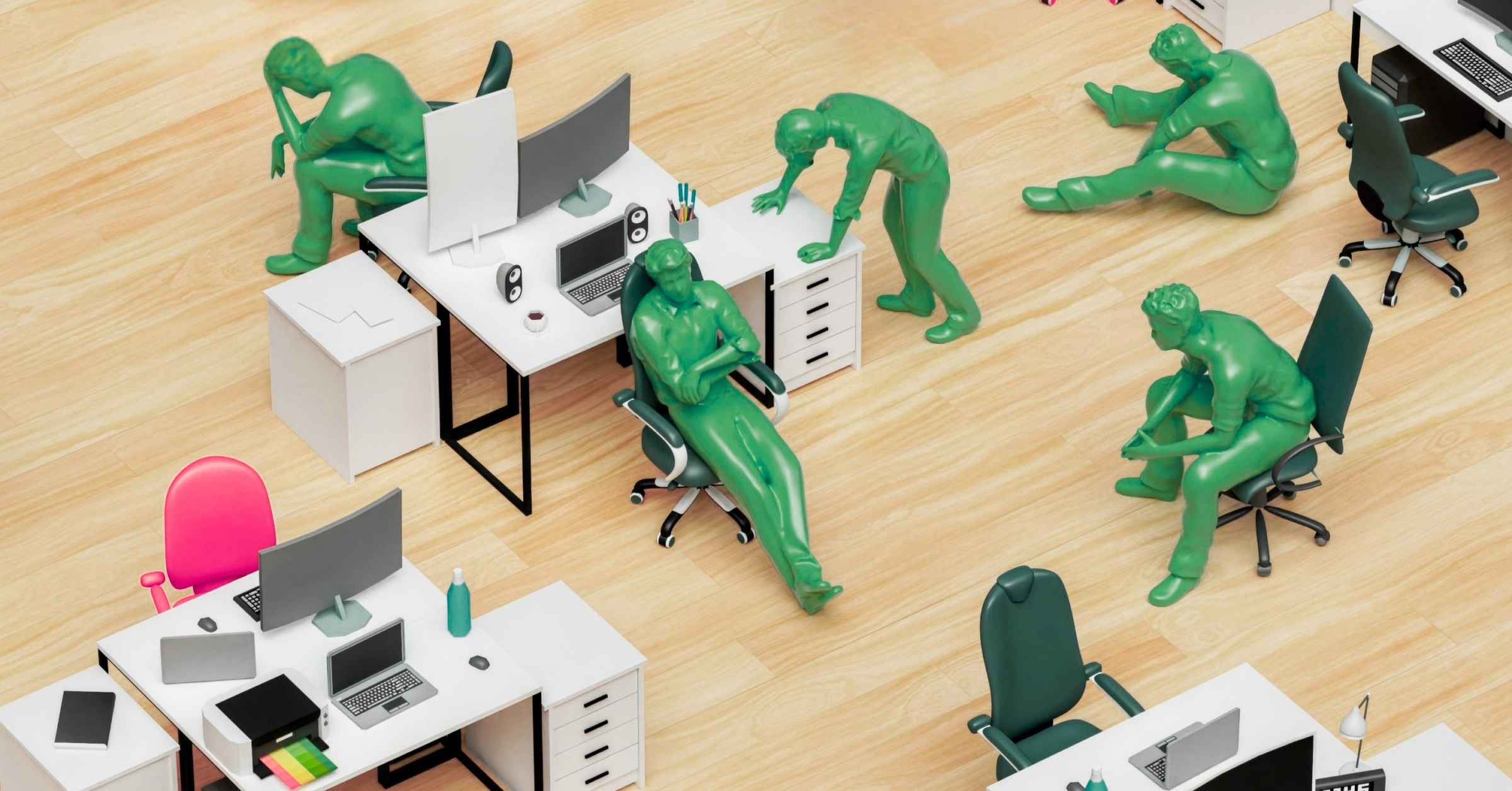
What do you picture when you think about AI? A glowing blue brain? A robot?
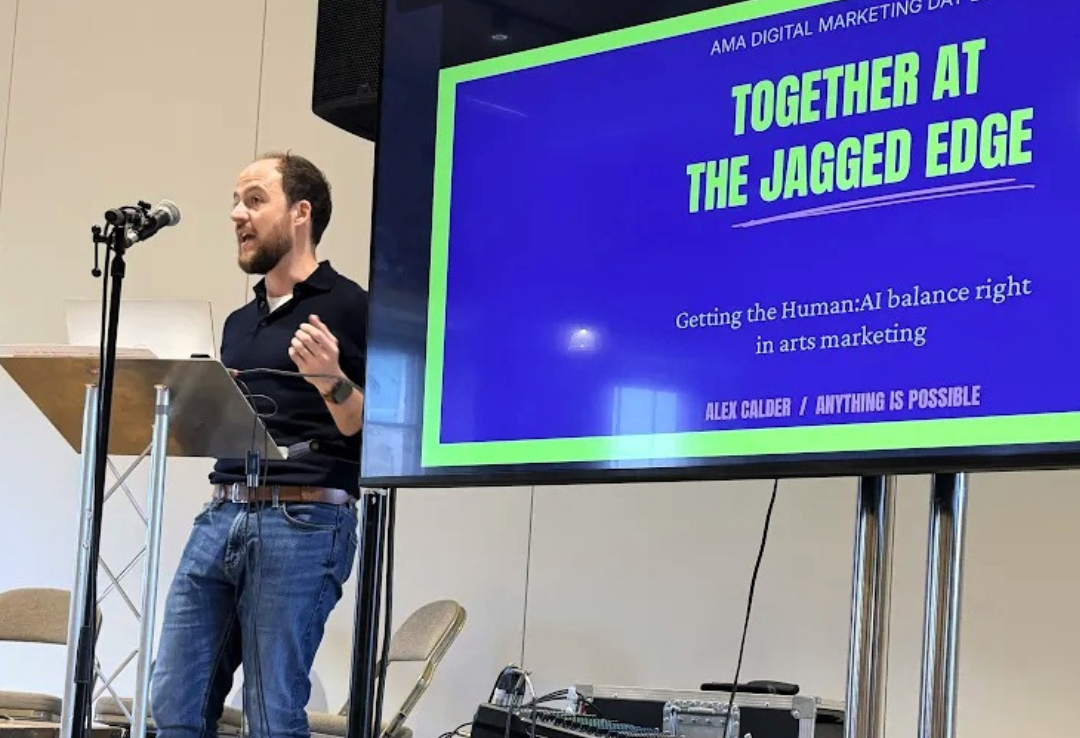
I started with those images at the Arts Marketing Association’s Digital Marketing Day because they all come from the same place, the mechanical, masculine view of the machine taking someone’s place.
That’s a limiting picture to bring to a conversation about how a theatre, a museum or a festival might use AI. It leaves out the people who know the work, the audiences it’s for, and the decisions that make it worth doing in the first place.
At Anything is Possible we’re big on removing our limiting beliefs when solving client challenges, so the idea of replacement doesn’t chime well with us.
Where does a person make the work better?
A theatre could ask AI to draft three subject lines from approved copy and get something useful in seconds. Ask the same tool to write the access section of the email, and it might confidently promise a step-free entrance that’s closed that evening.
When dealing with AI, it’s important to think about the jagged technological frontier. In an experiment with consultants, access to GPT‑4 helped people work faster and produce better answers on one set of tasks. On a separate task that involved making a recommendation from interviews and financial data, people with AI were less likely to get the right answer.
A good result on one task tells you very little about the one next to it.
So, you have to test the whole workflow. How long does it take to get from the brief to something you can actually send, including the checking and rewriting? And instead of beginning with “Can AI do this?”, ask a more useful question: “How does a human make this better?”
In the talk, I used a simple 5:1 illustration. If five people can each produce 20% more useful work, the team has the output of six.
The decision that matters is what the five people do with the time they get back. If it goes straight into producing more versions of the same campaign, you’ve made a busier marketing team. It could go into speaking to audiences, working with artists, improving access or giving a junior colleague time to learn why an editorial decision gets made.
Match the oversight to the stakes
Take a task your team does every week and ask five questions:
- Does human input change the outcome?
- Where’s the balance between speed, scale and quality?
- What happens if it goes wrong?
- Could a person make the result meaningfully better — say, 20% better?
- How much time and concentration would that take?
Then consider who sees the work and what’s at stake. AI can handle a low-stakes internal task, such as sorting a list of approved campaign assets. For routine audience-facing work, such as those subject lines, have someone review the output.
For a consequential internal recommendation, have a person write it and use AI to flag gaps or questions. For a public message people will rely on, such as a change to access arrangements, have the people responsible write it themselves. The grid gives the team a shared way to talk through those calls.
What this looked like at Sheffield Hallam
When we worked with Sheffield Hallam University, the marketing team had campaign data spread across systems, weekly trend spotting done by hand and video editing taking up senior time. We tried three workflows:
- Campaign analysis: AI pulled together data and surfaced patterns. The team decided what to do about them.
- Trend spotting: The weekly process went from 90 minutes to 10.
- Video production: Work from script to rough cut and from long videos to short clips went from 96 hours to 24, with people retaining editorial oversight throughout.
The figures we shared at the AMA were 500 hours saved a year across the team and 270% return on investment for the project. The part we think is equally important is how SHU kept ownership. We trained AI champions inside the team so they could run the workflows, judge the results and change them as the work changed.
Three things to do before Friday
Write down the picture of AI you currently carry. Share it with your team and ask what they picture. Find one low-stakes task where someone is spending time polishing work that could already be good enough. Then put five candidate tasks through the questions above and bring the strongest one to your next team meeting.
Give that task a small pilot. Agree what better looks like before you start, run it on real work and measure the result after review and corrections. Share what happened, drop what didn’t help and expand what did. The same method works whether you’re looking at museum visitor communications, university admissions or a charity’s donor emails.
And before you run the pilot, decide where the first hour you save will go. There’s probably a conversation with an artist, an audience member or a colleague that you’ve been meaning to make time for.